Precision Transmission: The Hidden Key to Extending EV Range
News 08/14/2025 84
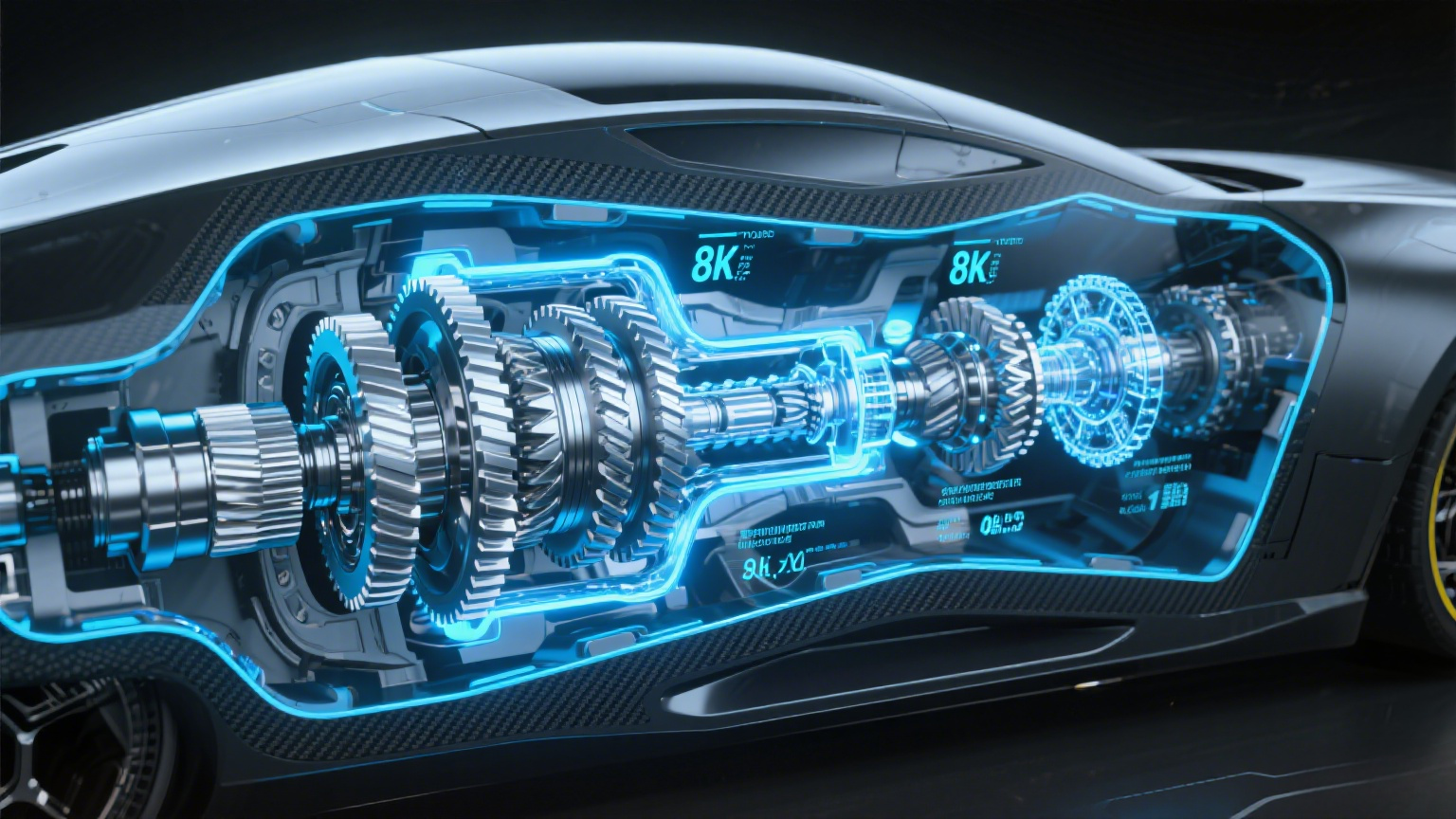
In the new energy vehicle industry, range is always one of the most critical metrics for consumers. As battery technology hits bottlenecks, clever engineers are finding breakthroughs in the transmission system—innovating with precision transmission technology to squeeze out precious extra kilometers of range from every detail.
The “Slimming Revolution” of Transmission Systems
Conventional wisdom views transmission systems as simple mechanical structures, but engineers in the new energy era have discovered vast optimization potential here. Using advanced optimization techniques, transmission components have successfully shed 30% of their weight—this isn’t just about cutting material but leveraging supercomputer simulations to precisely remove every gram of excess while maintaining strength. For instance, the tailgate transmission system of a certain brand’s latest electric model weighs only 1.2 kg yet delivers an impressive 120 N·m of torque.
Even more astonishing is the 0.01 mm-level precision machining technology. By employing five-axis precision grinding machines, the tooth profile error of worm gears is controlled to within 1/7 the diameter of a human hair. This extreme precision directly improves transmission efficiency by 5%, equivalent to saving 0.3 kWh per 100 km—a seemingly small gain that adds up to significant range extension over time.
Counting Every Watt
In new energy vehicles, every bit of energy usage deserves meticulous calculation. Engineers discovered that friction losses in traditional ball-joint structures accounted for 15% of total system energy consumption. Through innovative low-friction designs—including special surface treatments, optimized contact angles, and new lubricant materials—they reduced this loss to just 7%, contributing an extra 1.5 km of range.
Even smarter is the on-demand lubrication system. Traditional lubrication is like leaving a faucet running constantly, while the smart lubrication system acts like a sensor-equipped water-saving faucet—delivering just the right amount of oil only when needed. Real-world tests show this system reduces energy consumption by 0.5%, translating to 2 km more range.
A Fresh Take on Energy Recovery
The most exciting innovation is the energy-recovery worm gear system currently under testing. This system ingeniously converts the mechanical energy from tailgate movement into stored electricity. Preliminary tests show that each opening or closing cycle recovers about 0.002 kWh—seemingly negligible, but with 10 daily cycles, it adds up to 7.3 kWh per year, enough to power the vehicle for 30 km.
A technical lead from a new automaker revealed that by optimizing the entire transmission system, they added 3 km of range without increasing battery capacity. “This is equivalent to saving ¥2,000 in battery costs,” they said. “More importantly, this optimization is sustainable—as technology advances, we can squeeze out even more range.”
From materials science to precision manufacturing, structural design to smart control, engineers are uncovering surprising energy-saving potential in the “traditional domain” of transmission systems. This proves that solving range anxiety isn’t just about bigger batteries but also relies on this craftsman-like obsession with optimizing every fraction of energy.